
How to exploit a pattern
A recent opposition report shows how teams adapt and adapt again.
One of my most recent reports turned out to be one of the most interesting.
It was on Brentwood Town, who led the Isthmian Premier Division for much of the early season before their form began to dip. Although they’re still in a playoff spot with six games to go.
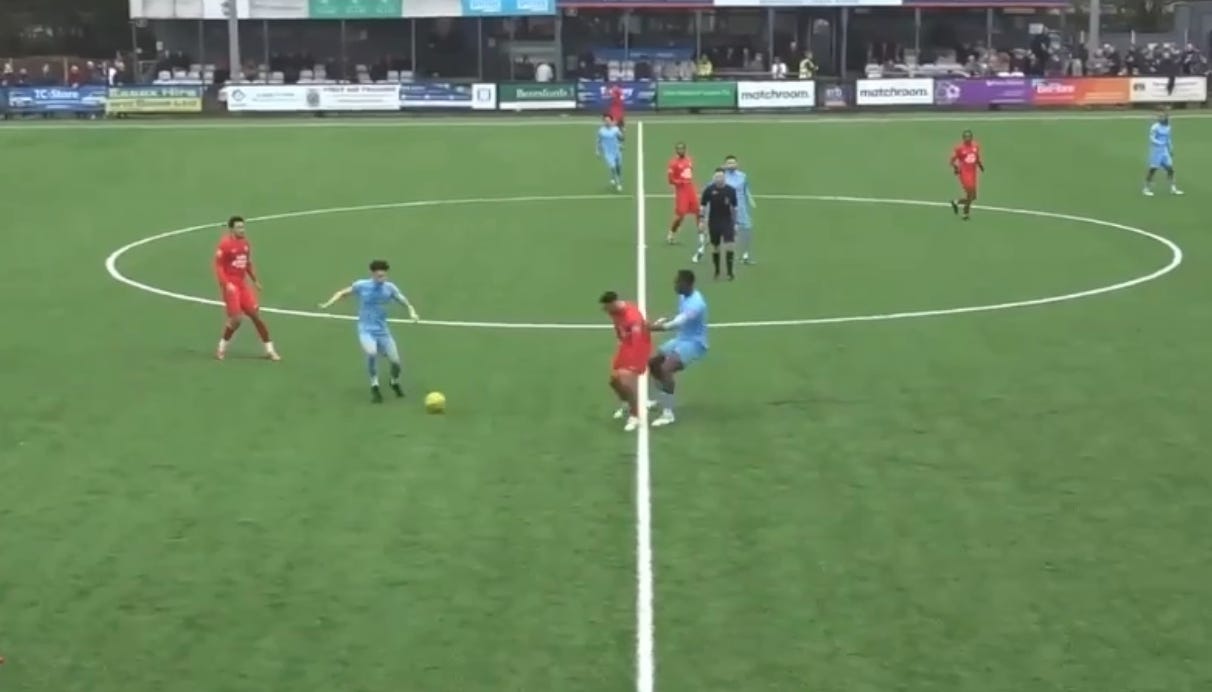
They looked to me to be a good side and well organised. That can sound like a generic comment, but the difference between organised and disorganised can be huge.
You see it in a lot of ways. But in Brentwood’s case, they looked like they knew what they wanted to do with the ball and what to do when they didn’t have it. And when they lost it, they were quick to either press or recover their shape.
I thought this was pretty good.
Solid man-to-man marking
What was interesting though, was their marking. Man-to-man across the pitch, which itself requires good organisation.
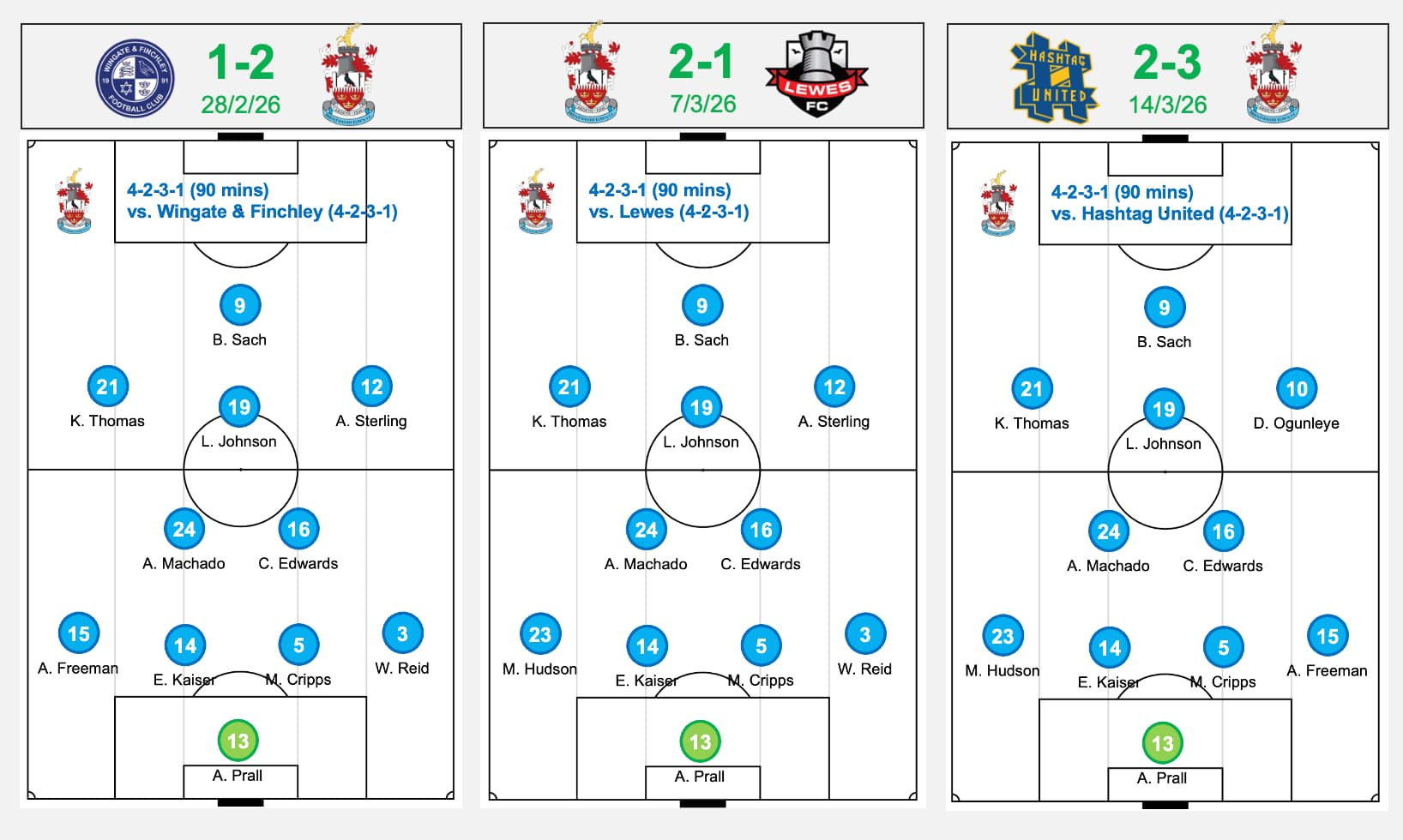
The clips made it clear, and Brentwood looked like they were coached to follow their man.
Their center back Ethan Kaiser especially, who must rank as one of the best defenders in the league. His ability to read opponents and step up stood out to me. But the whole team followed that example, making passing difficult for opponents.
I watched parts of three of their most recent games. The marking was clear in each of them. But against Lewes, I noticed a flaw in an otherwise solid system.
Looking out for weak points
Lewes themselves are usually one of the league’s better teams. Like Worthing and Dulwich Hamlet, Lewes always seemed to me to be a club that insists on a particular playing identity. Whether they have the players to execute that identity or not. And this season might be one they file under “not”.
But they’re still a capable side managed by a very capable coach. So they found a way to disrupt the man marking, using a tried-and-tested system.
They forced markers to follow players way out of position.
When an attacking player does this, one of two things tends to happen.
The marking player follows the player with the ball, creating space in the area they vacated. Or...
The marking player doesn’t follow and allows space to the attacking player with the ball.
Against Lewes, Brentwood did the second of these.
The result was effective, especially when Lewes targeted the Brentwood right back Wyan Reid.
Reid found himself caught in this typical dilemma of shifting or staying put. Exactly the problem Lewes wanted him to have.
You can see images of this here...
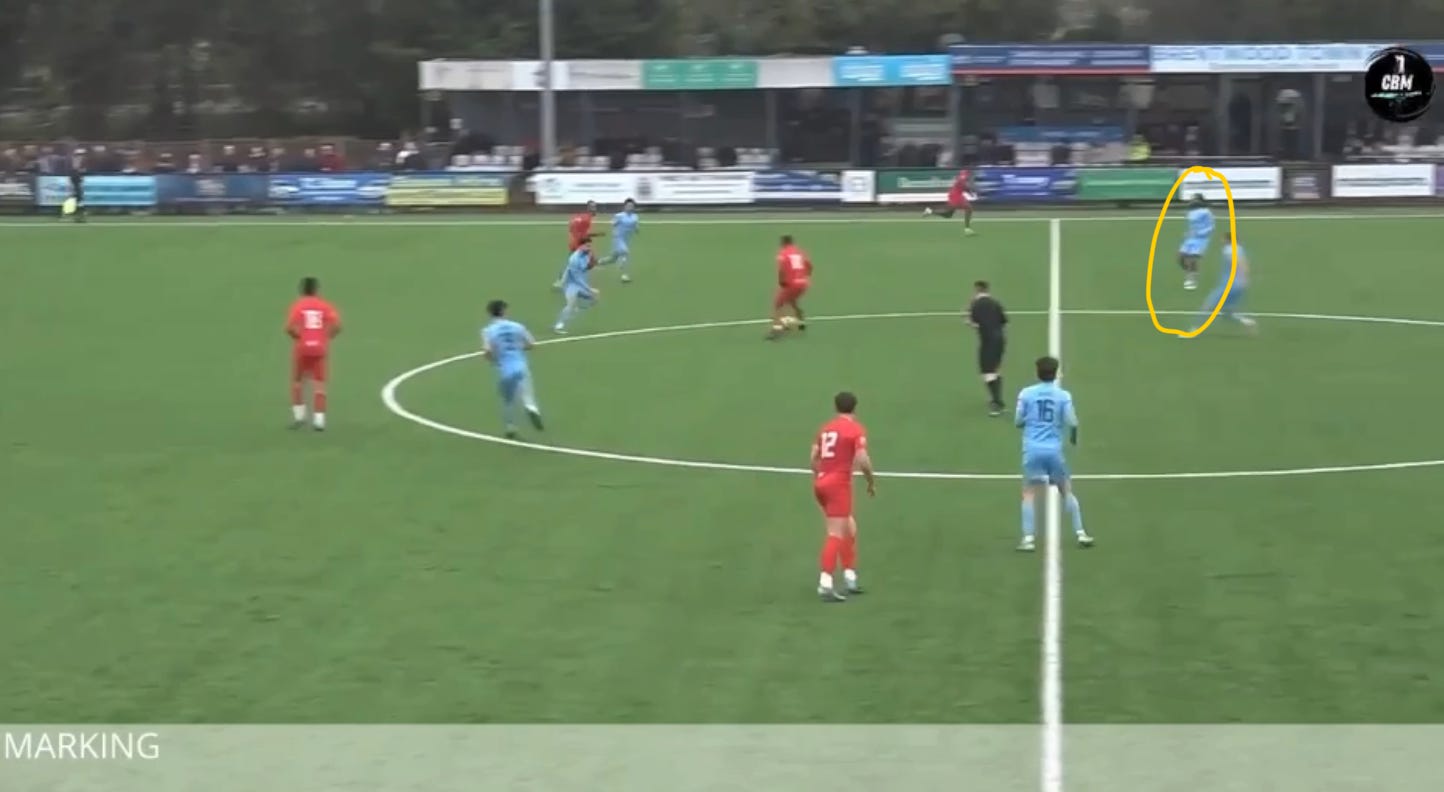
I find these cause-and-effect moments to be fascinating. Even more interesting was what happened next.
Which teams do their homework?
In their next game, Brentwood faced Hashtag United.
Hashtag had done their homework. They knew to expect man marking so had their wingers drift inside, mimicking what Lewes had done, and hoping to create the same problem.
But Brentwood appeared to have done homework too.
They made a change at right back, bringing in Andy Freeman with the instruction to follow his man inside, even if it meant crossing the entire pitch. Which, at times it did. Out of position, for sure, but also preventing Hashtag from playing how they’d intended.
You can see this happening here...
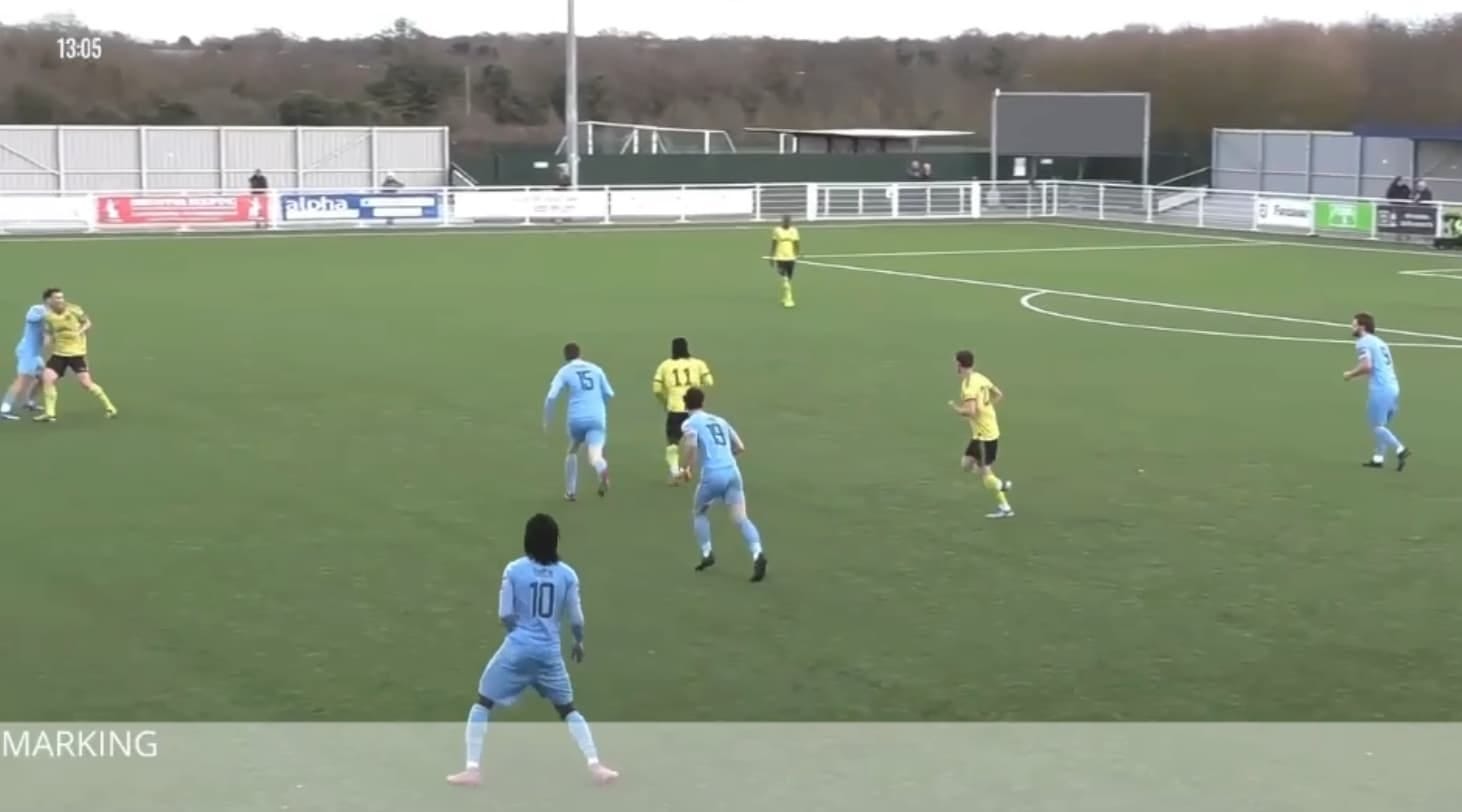
Brentwood won all three of the games I watched of theirs, so you could say the effect was minimal. But in football, it’s rarely something big that turns a game. It’s a small thing, or a few small things. And it’s satisfying to pick out one to identify.
Thanks Peter. That's a really good point. The other team always gets a vote. Football always reminds me of chess. One move always affects the next. You can never plan too far ahead.
I really enjoyed reading this. It reminded me of what Mel Gwinnett (Cheshunt Manager) said, which to paraphrase was that in a football match, you are playing another team that is trying to stop/disrupt the way you want to play. This article provides excellent examples of this.